The American Dream, Translated
Why we don’t need to speak the same language to understand the messiness of love.

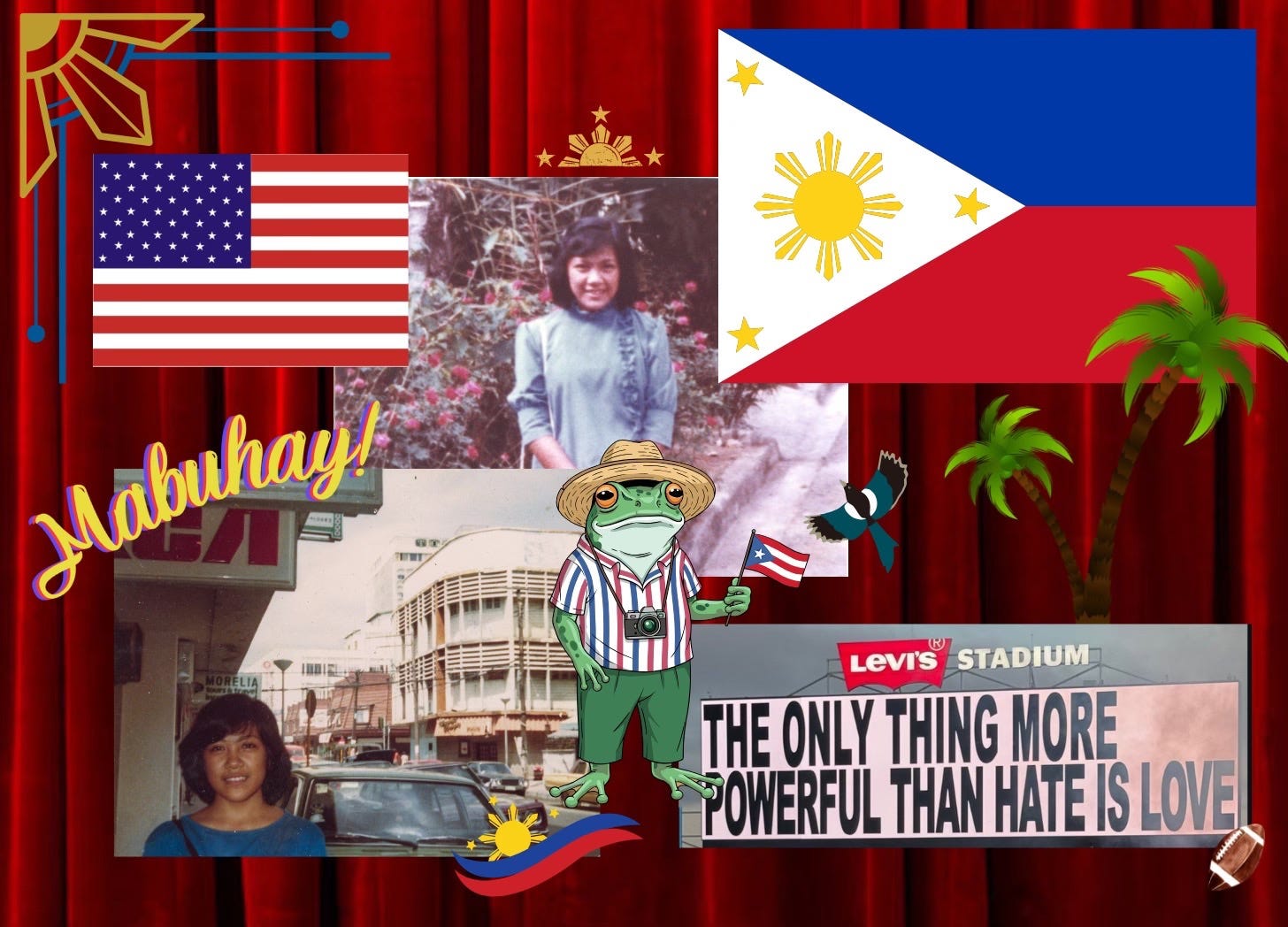
Recently, I asked an astrologer why my natal Saturn Mercury Conjunction squares the United States’ natal Pluto placement and he said: “That would indicate you’re a prisoner here.”
I find myself thinking often about my mom’s upbringing in the Philippines. I think about her teenage decision to marry an American man several years her senior, specifically to earn a “ticket to America.” I wonder what the propaganda was like back then. What was the specific messaging that convinced a young girl that life would be unequivocally better on the other side of the Pacific Ocean?
She gave up fresh produce, fresh fish, ocean water, and communal living for culture shock, isolation, and struggle. She worked in fast food restaurants to support her growing family, as well as her family back in the Philippines.
My grandmother grew up in the province of Abra in the Philippines. I’ve heard the stories of her and the other women in my family carrying huge water buckets on their heads up the hills (I credit this bloodline for my core strength and tendency to stand up straight). Even though my mom was born in the city (Quezon City for those wondering) she didn’t have running water in her house until after she was married (at 16, but this is another story for another time). She told me about the corruption, the lack of law and order, and the disasters that plagued her home, both natural and abusively man made.
On TV and in movies, she saw the glitz and glamor of the United States and idealized the possibilities that would suddenly open up once on US soil. She worked hard for her “American dream” by learning English like it was her first language (even though it was her third) and holding herself to the standard that she witnessed from her Tita, who’d married a military officer in Hawaii.
Countless times throughout my upbringing, I heard tales of how the Philippines almost became a US territory. She’d tell me how nice it would’ve been if she and her family had access to an easier path to citizenship.
Everyone wants the feeling of belonging. And as we move closer and closer to globalization, the United States continues to showcase a visual standard that feels both interesting, appealing, and possible if you just work hard enough.


So last night, as I watched the Bad Bunny Halftime performance, I couldn’t help but smile. First, because there’s really no music like reggaeton! It always makes me want to dance. But second, because the performance encapsulated connection, also known as the feeling of being with.


Together, with 135.4 million viewers, we saw a couple happily married. We watched a thriving community of neighbors supporting each other. We saw brothers, sisters, cousins, and friends dancing, drinking juice, and eating cake. (And we witnessed the Seahawks achieve vengeance for their 2015 loss!!! Thank goodness! I knew they would win!)
Ironically, before the show even started, Jake Paul had the audacity to criticize Bad Bunny as “a fake American citizen performing who publicly hates America.”

He wrote the script of hate before he even saw the actual performance.
People who live in Puerto Rico have been identified as US citizens since 1917. Puerto Rico is a US Territory. Why does Bad Bunny not get the same courtesy of being regarded as a US citizen as a person born in Cleveland, Ohio?
Witnessing the online backlash reminds me of the confusion I’ve experienced as the daughter of an immigrant. Why would my mom wish so badly for the Philippines to be a US territory when “Americans” so outwardly speak up against someone speaking Spanish during the halftime show?
Americans in the US consider themselves the ubiquitous Americans even though we’re only the northern part of the Americas. There’s South America too.
We live in 2026. We have the internet. We have AI in our pockets that can translate any sentence in a millisecond. The “language barrier” is no longer a valid excuse for disconnection. If you want to understand someone, you have the tools to do it.
During the Halftime show, we didn’t need to know the words. We could feel the love, the family, and the joy. That was enough. As Bad Bunny displayed on the screen in black and white:
“THE ONLY THING MORE POWERFUL THAN HATE IS LOVE”


My mom fell in love with the idea of “America” because of a script she was sold, not realizing that the reality involved loneliness and separation.
We do this in our relationships, too. We fall in love with the “glitz and glamour” of a person. We write a script for them and ignore the red flags because we want the fairytale.
We want the Super Bowl Halftime version of love that’s choreographed, bright, and perfect (with a slight lag to insure against wardrobe malfunction). But real life isn’t a halftime show. Real life is messy.
This is why we’re making a new short film that captures the inevitable mess.
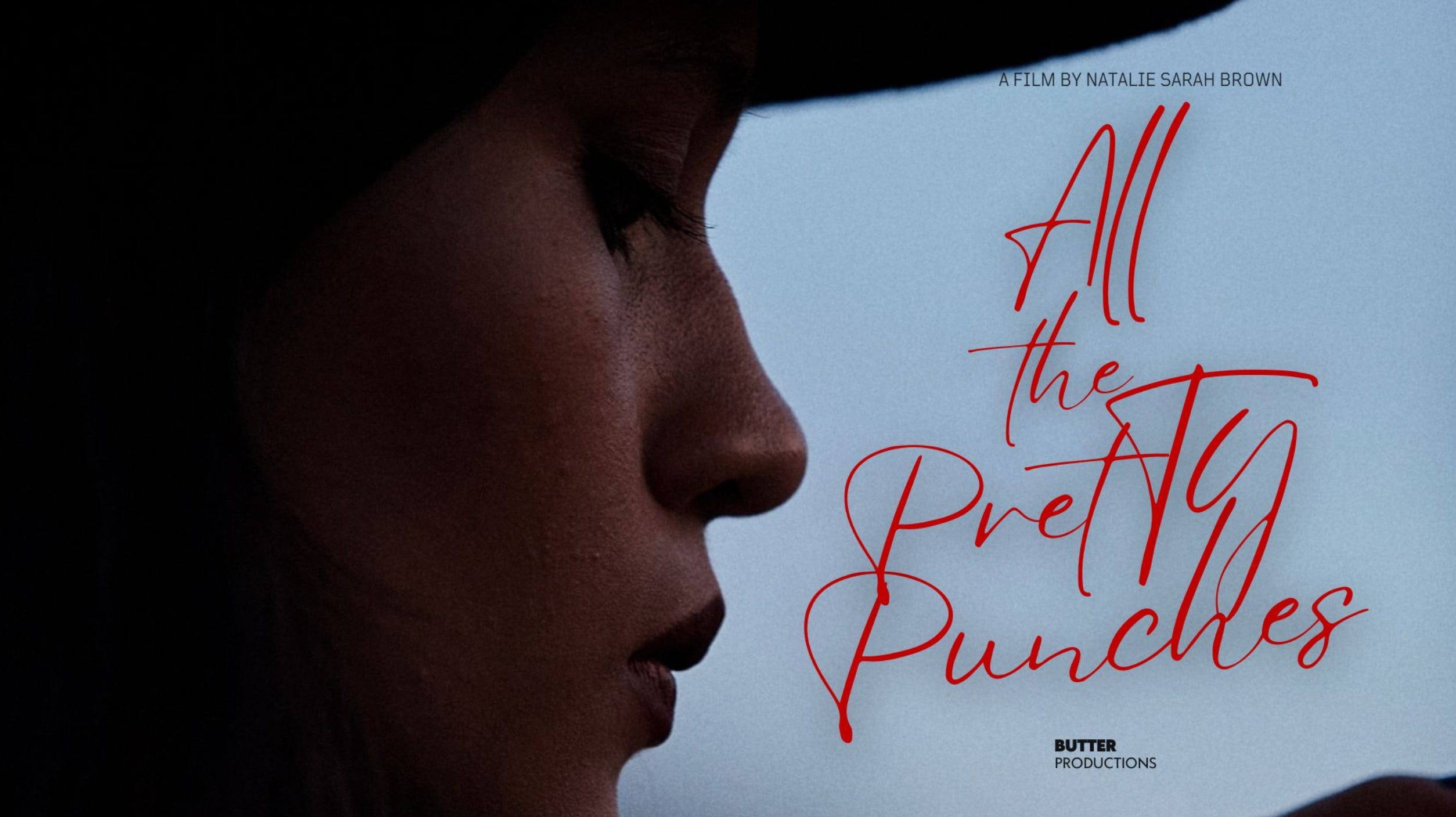
All The Pretty Punches is a female-led indie short film that explores what happens when the dream of romance falls apart.
The film follows Meredith, a woman who is trying to force a connection with a date at her ex-girlfriend’s birthday party. She is trying to live inside the fantasy. She is trying to ignore the corruption in her own heart and the lack of “running water” in her relationship.
But the film doesn’t give her the glitz. It gives her a bar fight and a bloody nose and most importantly, the truth. We need to support stories that show the struggle, the confusion, and the “sticky floors” of reality.
We’re crowdfunding this project on Seed&Spark. All The Pretty Punches shatters illusions, much like the illusion that you need to speak English to be “American,” or the illusion that a “ticket to America” fixes everything.
Wow this was so beautifully written!!! More please -Chels